
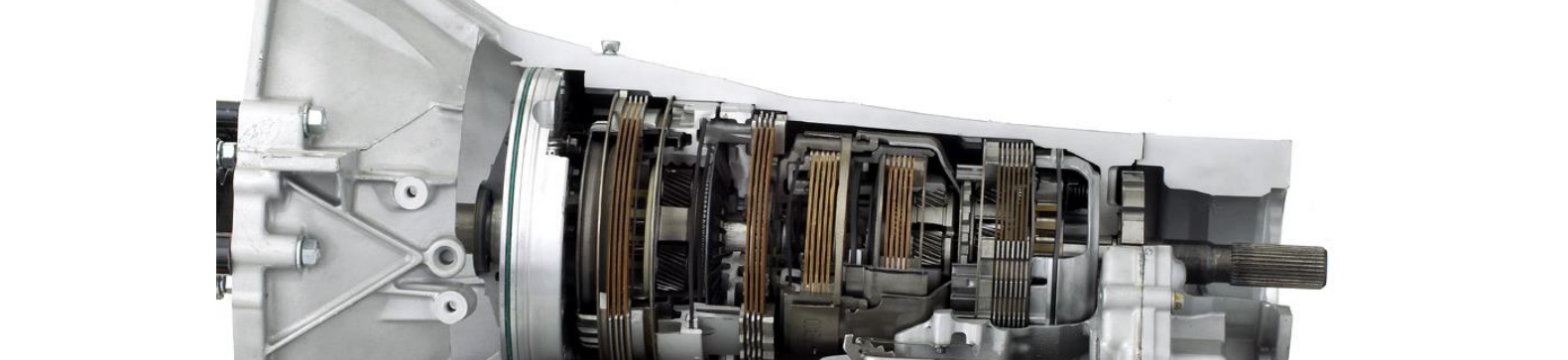
Installation instructions for the BD Ford performance transmission covering 1990-1997 E4OD and 1999-2003 4R100 units in 2WD and 4WD, including Power Take Off and V10 applications. Read the instructions and warranty disclaimer before beginning your installation.
Download the Original PDF Manual
WARNING: Do not use water-based transmission flushing fluid. The lining in the converter clutches will disintegrate, rendering the converter useless and voiding the warranty.
IMPORTANT: For 5R110 warranties to be valid, an ECM programmer (i.e. BD XTuner, SCT, Superchips, or Edge Evolution) must be installed with a transmission performance program.
Applications
This installation procedure covers the following BD performance transmission part numbers:
2WD Transmissions
- 1064402 — 1990-1994 E4OD
- 1064422 — 1995-1997 E4OD
- 1064442 — 1999-2003 4R100
- 1064442PTO — 1999-2003 4R100 (w/ Power Take Off)
- 1064342 — 1999-2003 V10 Truck & M/H 4R100
- 1064462 — 2003-04 5R110
- 1064482 — 2005-06 5R110
4WD Transmissions
- 1064404 — 1990-1994 E4OD
- 1064424 — 1995-1997 E4OD
- 1064444 — 1999-2003 4R100
- 1064444PTO — 1999-2003 4R100 (w/ Power Take Off)
- 1064344 — 1999-2003 V10 Truck & M/H 4R100
- 1064464 — 2003-04 5R110
- 1064464-PTO — 2003-04 5R110 (w/ PTO)
- 1064484 — 2005-06 5R110
Removal
- Disconnect the negative battery cable(s).
- Place the transmission into the Neutral (N) position.
- Raise the vehicle on a hoist.
- Mark the drive shaft and pinion yokes for assembly alignment. On 4WD models, remove the skid plate.
- Remove the transmission oil filler tube nut and filler tube.
- Position a drain pan and disconnect the transmission fluid cooler tubes at the cooler bypass valve.
- Remove the drive shaft. On 4WD models, remove the front drive shaft and transfer case assembly. On SuperDuty/Motorhome models, remove the transmission-mounted parking brake assembly.
- Note: If the vehicle is equipped with a PTO (Power Take-Off) unit, all or part of the PTO will need to be removed.
- Disconnect the shift cable from the transmission and manual lever.
- Disconnect the cable housing from the bracket.
- Disconnect the digital transmission range (TR) sensor connector.
- Remove the transmission heat shield.
- Disconnect the solenoid body connector.
- On 4WD models, remove the four-wheel drive switch connector from the transfer case.
- If equipped, disconnect the turbine shaft speed (TSS) sensor and the output shaft speed (OSS) sensor.
- Remove the inspection cover.
- Rotate the crankshaft with a pry bar from under the vehicle until the converter bolts are accessible.
- Raise the transmission slightly with a service jack to relieve the load on the cross-member and supports.
CAUTION: Make sure any securing straps or the transmission jack adapter do not touch the cooler bypass valve (CBV). Do not use the CBV as a handle. Damage to the CBV may cause a leak and/or failure to the transmission assembly.
- Remove the exhaust and cross-member.
- Remove the transmission mounting bolts.
- Carefully work the transmission and torque converter assembly rearward off the engine block dowels.
- Lower the transmission and remove the assembly from under the vehicle.
- Carefully slide the torque converter out of the transmission.
IMPORTANT: Upon installation, ensure the plug is in the torque converter and preload the torque converter with 2 quarts of fluid. Use the correct fluid type for your application (see table below).
Torque Converter Preload Fluid Type
- Ford E4OD: Mercon V, or Dexron III with Mercon
- Ford 4R100: Mercon V
- Ford TorqShift 5R110: Mercon SP
Installation
- Pre-clean all the cooler lines and cooler bypass valve.
- If the transmission is being overhauled or exchanged due to failure, the transmission oil-to-air cooler will need to be replaced. The system must also be flushed to remove any debris. Failure to do this will void the warranty. Do not use “transmission flush in a can”; the system must be flushed with a back-flow-compatible, dedicated transmission flushing machine using only oil.
WARNING: Do not use water-based transmission flushing fluid. The lining in the converter clutches will disintegrate, rendering the converter useless and voiding the warranty.
- Inspect the wiring harness and connectors for damage, corrosion, seal integrity, and terminal condition. Repair or replace as required.
- Lubricate the converter drive hub and oil pump seal lip with petroleum jelly.
- Lubricate the converter pilot hub with transmission fluid.
- Align and carefully install the torque converter into the oil pump. Rotate the converter back and forth until it is fully seated in the pump gears. The converter will be fully seated when you hear two loud “clunks.”
- If the vehicle is a 4WD model, install the transfer case assembly.
- If removed, install the output shaft drive sprocket speed sensor and bolt.
- Position the transmission on a jack and secure it with chains.
- Check the condition of the converter drive plate. Replace the plate if it is cracked, distorted, or damaged.
- Raise the transmission and align the converter with the drive plate, and the bell housing with the engine block.
- Move the transmission forward. Raise, lower, or tilt the transmission to align the bell housing with the engine block dowels.
- Carefully work the transmission forward and over the engine block dowels until the converter hub is seated into the crankshaft.
- Install the bolts attaching the bell housing to the engine.
- Install the torque converter-to-drive plate bolts using Loctite. On 7.3L diesel models, tighten the bolts to 53–72 Nm (39–53 ft-lbs), then check torque converter rotation.
- Install the exhaust and cross-member.
- Install the inspection cover.
- Connect the solenoid pack electrical connector.
- Connect the digital transmission range (TR) sensor.
- Install the transmission heat shield.
- Reconnect the shift cable, cable housing, and bracket.
- If equipped, reconnect the transmission-mounted parking brake assembly.
- If equipped, install the four-wheel drive connector.
- Align and connect the drive shaft(s).
- Install the transmission fluid cooler tubes to the cooler bypass valve.
- Install the transmission fluid filler tube and bolt.
- Install the transmission mainline pressure gauge.
- Lower the vehicle.
- Connect the battery ground cable(s).
- Fill the transmission with the vehicle manufacturer’s suggested fluid (see the fill capacities table below for suggested amounts).
NOTE: Fill capacities are listed only as a guide. Correct fluid level should always be determined by the marks on the dipstick. Capacities listed are total system capacity, including the torque converter and BD pan.
Fill Capacities
- First fill: 12 quarts (11.4 liters)
- Secondary fill (includes TC preload): 11.5 quarts (10.8 liters)
- Total system capacity: 23.5 quarts (22.2 liters)
- Test-drive the vehicle, verify pressures, and record.
Mainline Pressures
- E4OD: 100 psi at idle / 220–250 psi wide open throttle / 200–350 psi in reverse
- 4R100: 100 psi at idle / 220–250 psi wide open throttle / 200–350 psi in reverse
- 5R110: 70 psi at idle / 250–270 psi wide open throttle / 320 psi in reverse
- Remove the gauge and recheck fluid; top up if necessary.
IMPORTANT: Transmission/converter failures require that the remote filter be returned for inspection before any claim is considered. You will also be required to submit the cooler flow rate in GPM, measured at the outlet of the oil/air transmission cooler.