

Failure-diagnosis and inspection guide for the Dodge Cummins G56 6-speed manual transmission and clutch. Learn to spot the warning signs—cracked stamped-steel shift forks, mainshaft-to-cluster-gear misalignment, broken teeth and edge wear—before they lead to costly failure.
Download the Original PDF Manual
IMPORTANT: If you hear a transmission noise, get it fixed immediately—before the main case is ruined. Before installing a new clutch, have a qualified transmission specialist inspect the transmission and check the amount of play in the input shaft. Even a small amount of movement can indicate a problem that will only get worse and may lead to catastrophic failure.
Background: From the NV5600 to the G56
The six-speed manual transmission for the Turbo Diesel was changed by Dodge from the New Venture 5600—used since 1999—to a Mercedes-Benz unit, the G56, late in the 2005 model year. The G56 is an aluminum-cased six-speed with an integral bell housing and a new (for Dodge) dual-mass flywheel design. The Chrysler noise/vibration/harshness engineering group wanted to “elevate the customer experience” with the change in flywheel design. The G56 shifts easier and smoother, though reaching reverse seems easier on the NV5600.
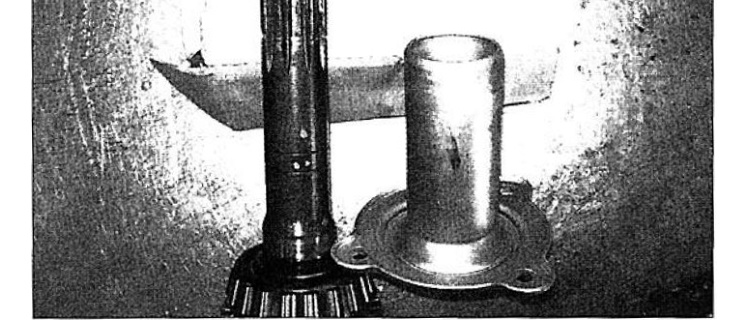
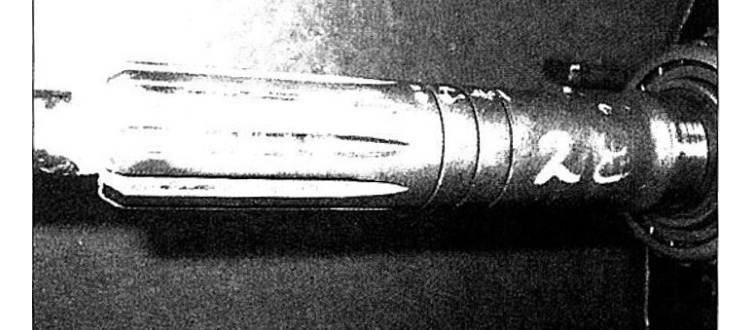
Initially the G56 overdrive was not as steep (0.79 versus 0.73 for the NV5600), but it was later changed to a 0.74 overdrive ratio in a new version for the 6.7-liter Cummins (2007.5 model year). The early input shaft has two grooves, visible after removing the front bearing retainer (a stamped-steel part that costs about $159); the late-ratio input shaft has three grooves. More reports of noise seem to be associated with the later design. A fairly large number of sixth-gear failures have occurred—the mild 0.79 overdrive may cause more drivers to use sixth gear when towing heavy trailers, when direct drive (fifth gear) should be used.
Lubrication and Cooling
According to Charlie Jetton and Richard Poels of Standard Transmission and Gear in Fort Worth, Texas, the G56 has been adequate in lighter-duty and moderate towing, but hot-shotters and owners who do very heavy towing have experienced failures that are still not completely resolved. Conventional rebuilds help but do not eliminate every problem for these owners.
- The G56 often came with too little lubricant, and automatic transmission fluid (ATF) may not be suitable under some driving conditions.
- A slightly “heavier” lubricant performs better at the elevated temperatures the transmission can see when towing or in high ambient heat. Lubricants that worked well in the NV5600—such as Pennzoil Synchromesh or Torco RTF—are recommended.
- Aluminum “grows” with heat at about three times the rate of cast iron, so endplay clearances can become excessive at high transmission temperatures.
- High ambient temperatures and heavy towing both increase transmission heat; the unit is “trapped” in the floor tunnel of the truck and gets limited airflow for cooling.
- Units run on the factory lube (ATF) frequently come in with browned bearings from lubricant degradation.
NOTE: Like most manual transmissions, the G56 has no filter, so any grit, metallic dust, or broken pieces will circulate and cause more damage. Cleanliness during any rebuild is critical—reputable shops use solvent washers, a hot tank, and a high-pressure assembly lube.
Common Failure Points
These are the areas that fail most often on a G56. Inspect each one carefully during diagnosis or before installing a new clutch.
Input Shaft Bearing and Endplay
The main drive bearing at the front of the case (the input-shaft bearing) is prone to failure, and virtually every G56 that comes in for rebuilding has large endplay on the input shaft. The rear bearings can also fail. Due to case flex and stretch, shops often have to add 0.008″ to 0.011″ more shim to reduce endplay (the stock shim is generally 0.055″ thick). By contrast, the cluster shaft usually takes the same shim, or at most 0.001″ to 0.002″ thicker.
Stamped-Steel Shift Forks
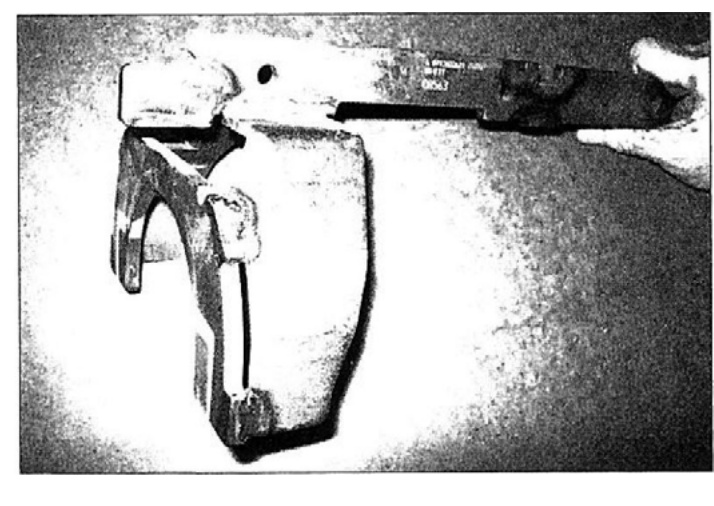
The spot-welded shifter forks may break at the weld. A proper rebuild re-welds them inside and outside.
Gear Misalignment, Wear and Broken Teeth
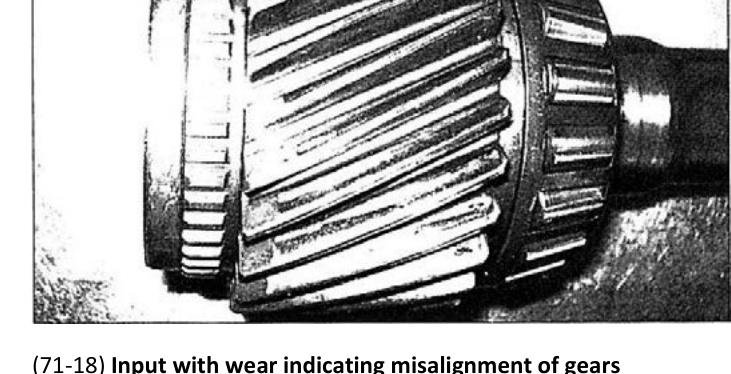
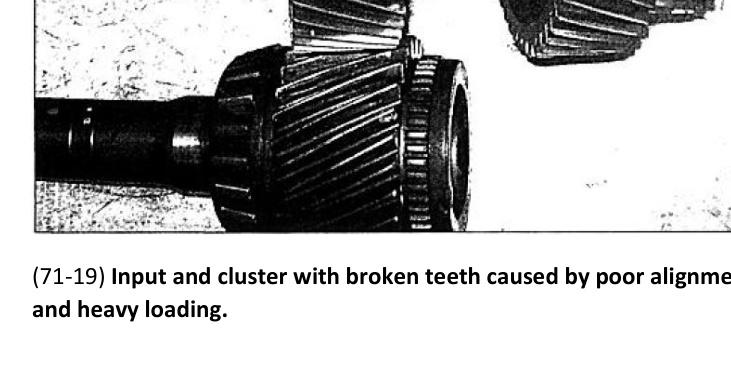
Shops often find evidence of misalignment between the mainshaft gears and the cluster gear. Wear patterns indicate the teeth are spreading the transmission case, causing the input gear to wobble, so the gear teeth wear closer to their edges. Heavy loads then cause them to break.
Two-Piece Case and Cracking
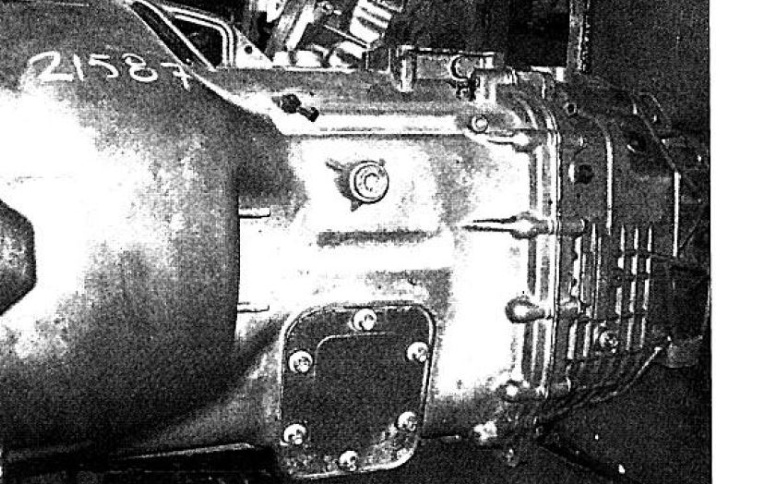
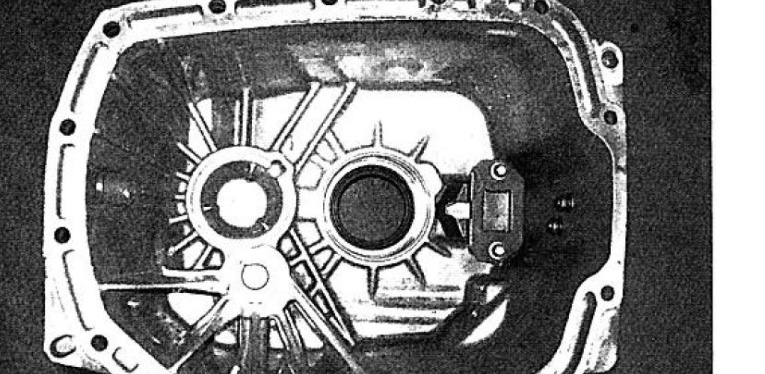
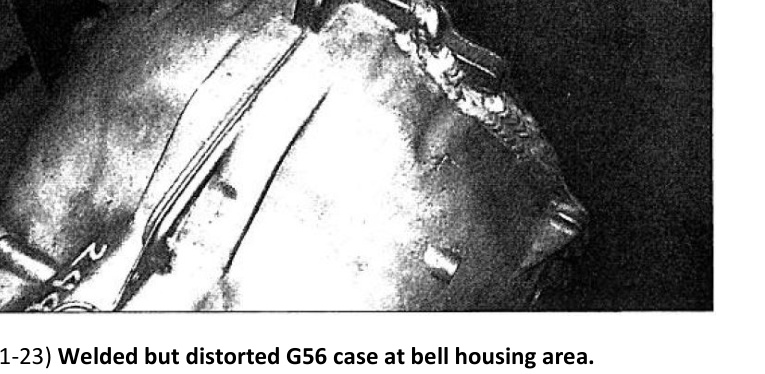
The stock transmission case is two-piece, split crosswise just behind the shifter-tower area. Inside, the front of the case includes supports for all internal components, and the rear housing carries the corresponding bearing and shaft mounting supports. Owners have tried to repair cracked cases with poor success—one example was warped to 0.070″ out of square by welding.
Teardown and Disassembly
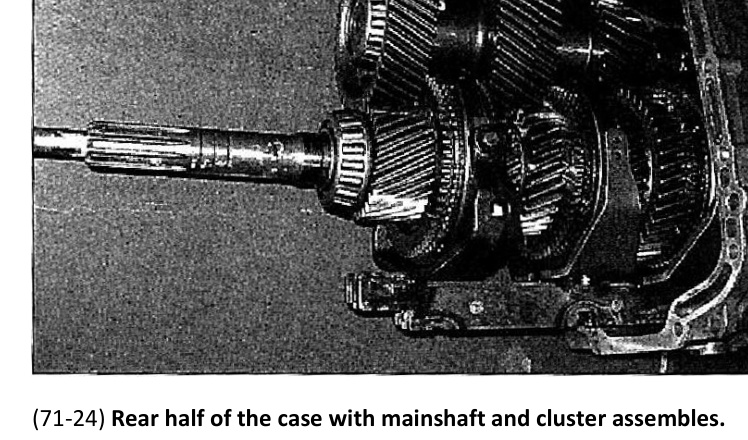
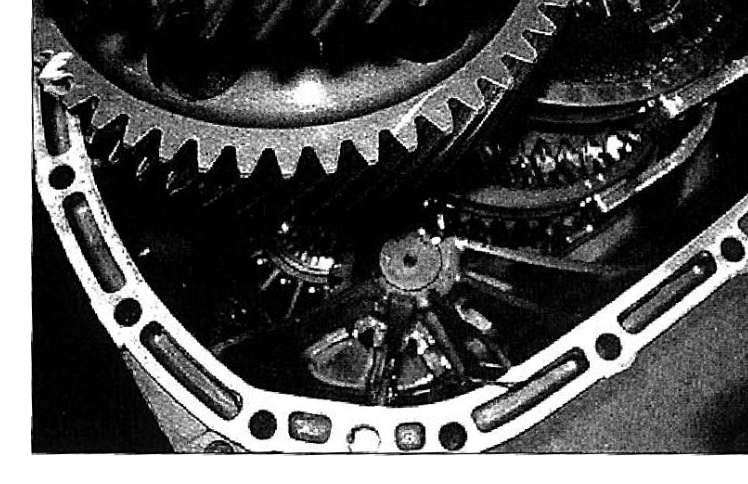
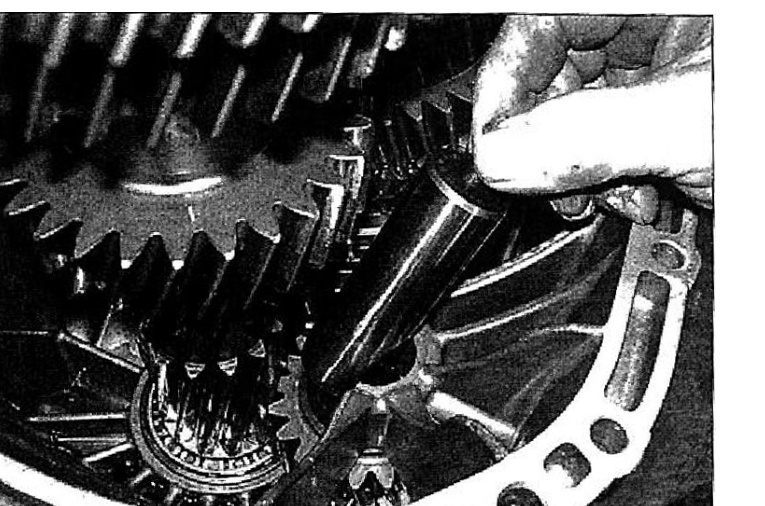
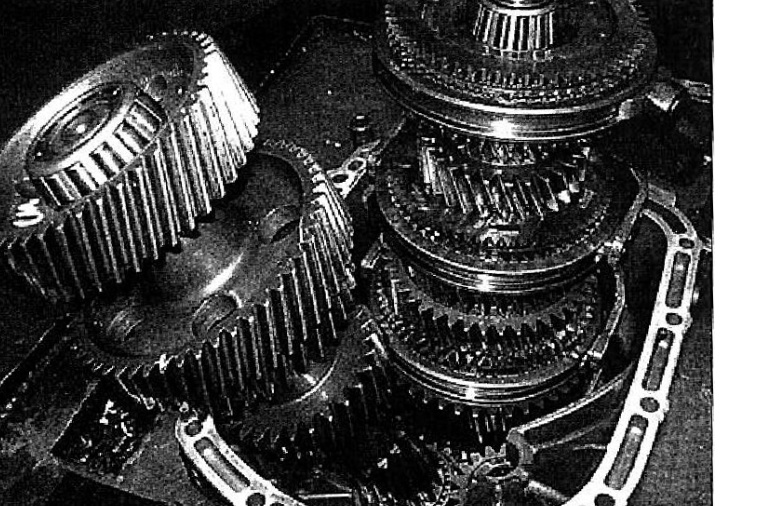
After splitting the case, the internal components remain in the rear case half. A close-up shows that the reverse idler gear blocks removal of the gear sets. The trick to disassembly is to thread a metric bolt (M6 x 1.0 thread) into the end of the idler shaft to pull it out, then push the gear out of the way and separate the cluster and mainshaft.
Replacement Parts Are Expensive
The G56 is a German design manufactured in Brazil. Parts currently have to be purchased from Dodge at high prices—for example:
- Synchronizer assembly (a complete set for one pair of gears, e.g. 1–2, 3–4 or 5–6): up to about $740
- Input shaft/gear: about $750
- Cluster gear: about $1,385
- Mainshaft: about $474
- Sixth gear: about $450
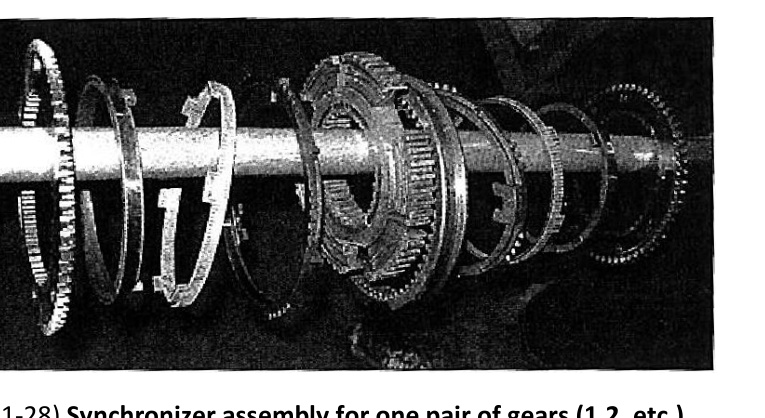
Electrolytic Pitting of Gear Teeth
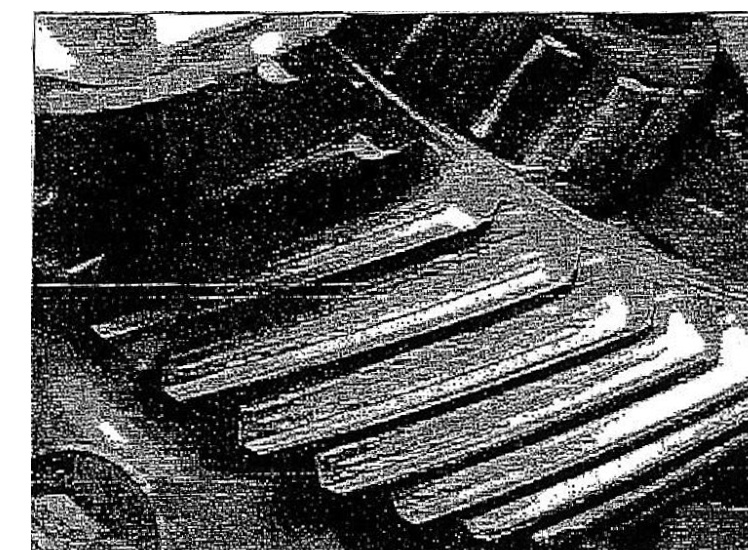
Standard has seen electrolytic pitting of gear teeth similar to that found in automatic transmissions, which also use aluminum cases. The damage appears on the leading drive side and edge of the cluster and main gear teeth, presumably from an electric field being generated. An extra ground strap—like the one sometimes added to automatics—may be the cure for this issue.
Root Cause: A Spreading Case
It appears the transmission case is irreversibly spreading lengthwise—more at the mainshaft (top) than at the cluster. The mainshaft is two-piece, with the input gear separate from the rest of the mainshaft, and this contributes to the forces spreading the case. The result is the excessive endplay seen on the mainshaft and the sloppy side-play felt when wiggling an input shaft from side to side. This is breakage or distortion, not merely dimensional growth from heat (although that growth is no doubt involved). One proposed fix is a “girdle,” possibly with load bolts at the top of the case, to strengthen the rather thin G56 case—which is inadequately reinforced at the top and further weakened by the crosswise split.
Recommendations
The G56 has proved to be a fairly good transmission, but several upgrades are worth considering:
- Use more and better lubricant.
- Perform a preventive teardown and rebuild before catastrophic failure occurs.
- Downshift to avoid heavy towing at low RPM.
- Change the clutch periodically, and always replace the pilot bearing as well.
NOTE: This transmission does not seem well suited to heavy towing beyond the manufacturer’s recommendations.
South Bend Dual Disc (SDD) Clutch Notes
The following information from South Bend Clutch explains why driveline noise occurs and how driving habits affect a new clutch.
- A gas engine has a smooth, uninterrupted rotation; a diesel does not. A diesel produces a pulsation from small, quick torque spikes (4–8 times per revolution, depending on cylinder count). This vibration—most apparent at idle—must be dampened so it is not transferred to the transmission, where it makes the gears “clatter” and rattle.
- The factory Dual-Mass Flywheel (DMF) dampened that vibration well when the engine ran at factory specs and towing limits were not exceeded. Once trucks were used beyond OEM recommendations—through horsepower and torque upgrades, excessive towing, and poor driving habits—the DMF wore out and eventually failed. While wearing out, it kept dampening the vibration until it failed completely.
- To withstand large increases in torque and load, the South Bend system uses stronger dampening springs in the clutch discs. The original design was too strong in that area and caused some idle noise; the newer hub design has eliminated that in most trucks without sacrificing torque capacity.
- Noise is not always caused by the clutch. How the engine runs and the amount of wear in the transmission (usually a combination of both) directly affect the likelihood of idle noise.
WARNING — You must inspect the transmission. Because the late-model G56’s internal components (especially the aluminum case) are prone to wear, a qualified transmission specialist must check the amount of play in your input shaft before installing a new clutch. Even a small amount of movement could indicate a problem that will worsen and may cause catastrophic failure.
Noise while accelerating—a driving-habit issue. To save fuel, some drivers shift into the next gear too soon. Running in too high a gear at low wheel speed lugs the engine (the same feeling as accidentally hitting 4th instead of 2nd). This lugging causes backlash in the splined hubs of the clutch discs and can produce unnecessary noise, most apparent in late-model, aluminum-cased transmissions. The solution is simple: keep the RPM up while shifting. This prolongs the life of the entire drivetrain. With a stronger clutch system, you may need to adapt how you drive.
Important Information About SBC G56 Clutch Assemblies
In 2005, Chrysler redesigned the 6-speed manual transmission and clutch for Dodge diesel pickups. Since the Mercedes-built G56 transmission and the LUK-designed dual-mass clutch system were introduced, owners have experienced problems at an alarming rate—especially when engine power is turned up or factory towing limits are exceeded. Noise, vibration and slippage are common, obvious symptoms of a system failure.
- Many owners do not realize the transmission may be worn as well. Too often, only the clutch is replaced or upgraded.
- A failed dual-mass flywheel, and the vibration it creates, can damage the transmission regardless of mileage.
- A new, higher-capacity clutch will not deliver its advantage if installed behind a worn transmission.
- Overloading the drivetrain can wear out a transmission in a relatively short time. The G56 aluminum casing is prone to wear even under normal conditions.
- Excessive endplay or input-shaft movement—caused by worn bearings or housings—is a very common, often-overlooked problem that can cause noise, clutch-release issues or pilot-bearing failure.
WARNING: Installing a worn transmission that has not been thoroughly inspected by a qualified professional will void any and all warranty on the clutch parts.
Torque Specifications
- Flywheel to crank: 90–100 ft-lbs
- Pressure plate to flywheel: 45 ft-lbs
South Bend Ford/Dodge Dual Disc — Installation Instructions
- Unbolt the pressure plate from the flywheel in a star pattern, using quarter turns.
- Check that the discs move freely on the input shaft before installation.
- Bolt the flywheel to the crank to the specified torque.
- Line up the paint marks on the pressure plate, center plate, and flywheel.
- Install the discs according to the sticker located on each disc for correct hub direction.
- Install the pressure-plate bolts in a crossing pattern, one quarter turn at a time.
CAUTION: Do not use an air-powered tool for this step.
- Refer to the included Important Information Form for additional installation information.